Air Base Parkway, Fairfield, CA, USA


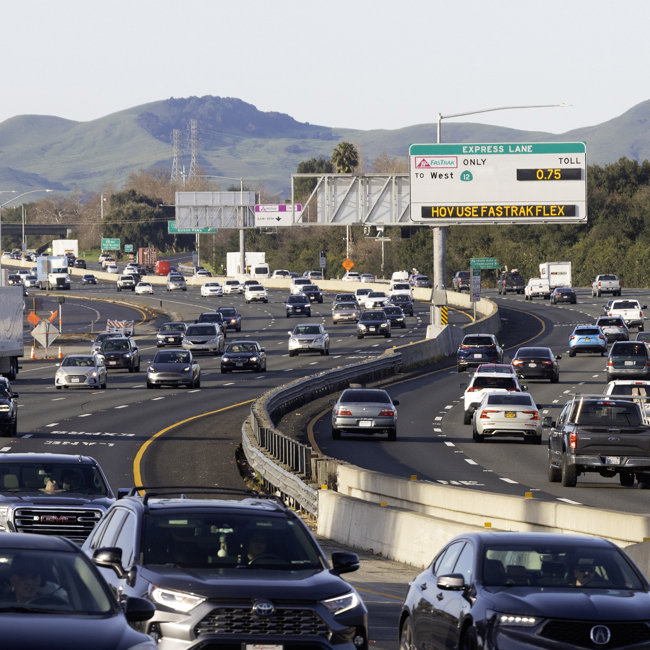
In order to alleviate traffic congestion on the I-80 corridor, STA will be working with our member agencies and Caltrans to add a managed lane in either direction from I-505 to Airbase Parkway by 2022. This project will also convert existing High Occupancy Vehicle (HOV) lanes to Managed Lanes, creating a cohesive network within Solano County. Over time, this project will reduce traffic congestion while promoting alternative modes of transportation such as carpooling and public transit. Ultimately, the Solano Express Lane network will expand north to meet the Caltrans District 3 Express Lanes in Yolo County and south from Red Top Road in Vallejo. In December 2020, this project was awarded $123.4M in funding from the Trade Corridor Enhancement Program.
For more information, please see the Fact Sheet for this project, located on the Updates tab with related Project Documents.
I-80 Managed Lanes 4G080K_FINAL PSR-PDS_03-30-12
Attachment A_Alternative A_Typical Sections and Layouts
Attachment B_Alternative B_Typical Sections and Layouts
Attachment E_PID Coop & Draft PAED Coop
Attachment F_Existing Utilities
Attachment H_Right of Way Conceptual Cost Estimate
Attachment I_Transportation Planning Scoping Information Sheet
What are the I-80 Express Lane rules?
Why were the new highway lanes on I-80 built as express lanes?
I-80 is a heavily traveled, unreliable gateway corridor between the Bay Area, Sacramento, the Sierra, Redding and beyond, and Nevada. The corridor serves local and regional commuters, freight, and significant pass-through traffic. Despite significant regional growth and a burgeoning mega-region economy, the I-80 gateway corridor had not been expanded since the 1970s. Expanding capacity accommodates more vehicle trips but also encourages more vehicle trips. Expanding the corridor with express lanes relieves traffic congestion while tempering new traffic demand. The express lanes prioritize carpools and transit with a dedicated, reliable travel lane, thereby increasing person throughput. Express lanes also offer solo drivers the choice to pay tolls to use the more reliable travel lane to increase use of the lane. The added capacity and the choice for a faster trip reduces diversion from the highway to local streets and generates revenue that is reinvested back into the corridor for operations, maintenance, and future improvements.
Why operate the I-80 Express Lanes on weekends?
Because of its position as an interregional gateway, weekend traffic on I-80 through Vacaville and Fairfield often equals or exceeds weekday volumes. Operating express lanes on weekends extends the weekday express lane benefits to weekend commuters, carpools, vanpools, and transit riders and those who choose to pay tolls. Managing weekend traffic discourages diversion to local streets and helps stabilize corridor performance year-round. Weekend traffic on I-80 is expected to grow over time, so starting weekend tolling at the inception of express lane operations helps manage the growth of this future demand and encourages new carpooling behavior.
Caltrans, the Solano County Transportation Authority, and the regional agency that operates express lanes called BAIFA (the Bay Area Infrastructure Financing Authority (BAIFA) mutually support weekend express lane operations on I-80 for an up-to-3-year pilot period.
Why does a carpool need 3 or more passengers to travel toll-free?
HOV3+ maximizes people-throughput in the express lanes. Prioritizing higher-occupancy vehicles supports climate and congestion-management goals by rewarding shared travel. HOV2 vehicles still receive a discount, while single-occupant vehicles can choose to pay for a more reliable trip. Limiting toll-free travel to 3+ person carpools also helps ensure that the lanes will not become overcrowded and lose their travel-time benefits. Highly traveled corridors like I-880, I-80 in Contra Costa and Alameda counties, SR-237 and US-101 in the west bay all require 3+ persons per vehicle for HOV lane use or toll-free express lane use.
How do the Express Lanes benefit Solano County?
The demand-management policies of the express lane allowed the region to add capacity to I-80, which hadn’t been expanded since the 1970s, despite growing population and economic activity. Without lane management policies, new capacity only serves to increase traffic, spiraling the congestion problem, frustrating drivers and adding greenhouse gas emissions. Toll revenues will pay for operating, maintaining, and preserving the I-80 express lanes, including enforcement and reserves. Remaining net revenue is reinvested in the I-80 corridor, as required by statute. The project also delivers non-financial benefits to Solano residents: more reliable travel for weekday and weekend workers and transit riders, reduced cut-through traffic on local streets, and having regional pass-through traffic contribute directly to improvements in the county.
How are people with the lowest incomes helped?
Express lanes are intended to be used by toll-paying drivers when getting somewhere on time is most critical; not necessarily an everyday choice. Drivers of all incomes experience those moments. To support the ability for very low-income drivers to benefit from express lanes, the Express Lanes START pilot program provides a 50% toll discount to qualifying low-income drivers. Additionally, the Bay Area Tolling Authority is expanding outreach, toll-tag distribution, and multilingual education—particularly in Solano County—to reduce barriers to accessing FasTrak and express lanes benefits.
Are the I-80 Express Lane policies permanent?
The I-80 Express Lane operating agency called BAIFA (the Bay Area Infrastructure Financing Authority) is monitoring the I-80 Express Lane operations and can adjust policies to improve lane performance and respond to drivers’ needs. I-80 weekend tolling data will be collected for one year and evaluated for congestion, person throughput, revenue, diversion, travel reliability and other factors to determine if weekend tolling should continue. A decision on whether to continue weekend tolling will be determined between late 2027 and late 2028.
BAIFA and Caltrans will also monitor the express lane capacity and speeds to determine if the HOV occupancy requirement for toll-free travel should remain at 3+ or be adjusted upward or downward.
Finally, BAIFA will assess the effectiveness of half-price tolls for income-qualified drivers and determine if this benefit should continue or if there are other, better ways to support very low-income drivers.
Are the I-80 Express Lanes causing more congestion?
The I-80 Express Lanes created additional lane capacity in the 18-mile corridor, thus easing traffic congestion. The start of express lane operations which occurred several months after the opening of the new lane capacity requires drivers to adjust their behavior and learn new rules. Following the start of express lane operations, drivers need to adjust and take advantage by ordering FasTrak in advance. Compared to conditions before the expanded express lane facility, congestion has been improved.